
Club sets goal of discovering family ties for Clarence ‘Clarrie’ Shenton
He helped write the opening chapter of Australian football history as one of the original Socceroos and built a sporting legacy from Ipswich to the Bayside.
But when he died at just 33, he left behind a wife and young son whose story has largely disappeared from the historical record.
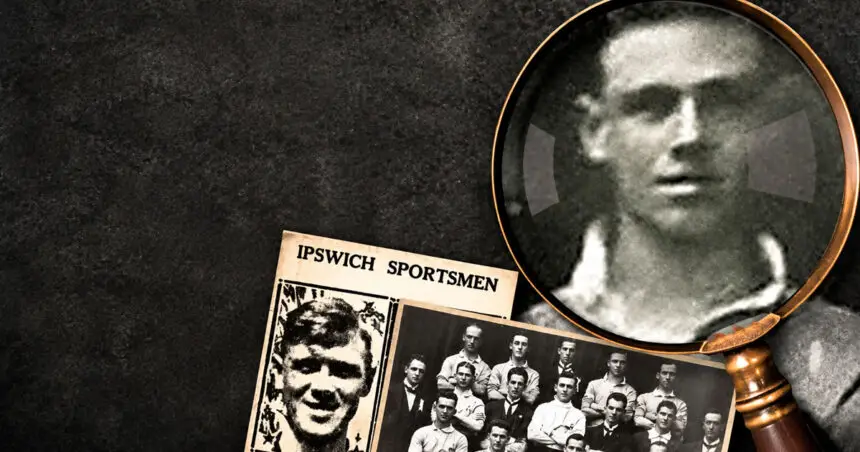
Now, 92 years after his death, Local Ipswich News is launching a search to find the descendants of Socceroo cap number nine Clarence “Clarrie” Shenton, a talented centre-half who toured New Zealand with the first Australian team in 1922.
From the classrooms of Ipswich Grammar School to the football fields of Wynnum and ultimately the green and gold of Australia, Shenton carved out a place in sporting history that has endured for more than a century.

Yet while his achievements have been preserved and his name continues to be honoured, the story of the family he left behind remains largely untold.
What became of his young son, where did the family go and who carries the Shenton bloodline today?
Clarence William Britton Shenton was born at Nambour on May 27, 1901, the son of Methodist minister Reverend William Shenton and Sarah Ann Britton, before attending Ipswich Grammar School and beginning an association with Ipswich that would eventually see him become a prominent figure in the city’s sporting, business and community life.
An outstanding all-round sportsman who excelled in tennis and cricket, Shenton also proved himself with a football after his family relocated to Wynnum in 1918, where he experimented with rugby and Australian rules before finding his place in association football.
In 1921, he joined the newly formed Wynnum Soccer Club, now Wynnum Wolves FC, for its inaugural season and, within just a year, the young sportsman with strong Ipswich roots was selected for Australia’s historic first international football tour of New Zealand.
Shenton later joined Brisbane club Thistle, serving as vice-captain in 1925, and more than a century after his time at Wynnum, the club has never forgotten him –now presenting the Clarrie Shenton Medal and Perpetual Trophy as the Wolves’ Players’ Player award, ensuring his name continues to be carried by new generations of footballers.
Wynnum Wolves Football Club President Rabieh Krayem said it was a special honour to be able to boast an original Socceroo – something only a handful of football clubs could lay claim to.
“As a club we celebrated our Centenary back in 2021 which was quickly followed by the Socceroos’ Centenary in 2022 – and Clarrie Shenton’s name was front and centre of all those celebrations,” Mr Krayem said.
“But despite that exposure we are no closer to being able to find a current-day connection to the Shenton family.”
Football historian and Encyclopaedia of Socceroos author Andrew Howe said Shenton was one of the youngest members of that first national team, celebrating his 21st birthday in the Socceroos’ inaugural match in 1922.
“Playing 11 games on that pioneering New Zealand tour, his contribution stands out in the earliest chapter of Australia’s football story,” Mr Howe said.
Returning to Ipswich, he became a driving force behind the development of tennis in the city.
His personal ties to Ipswich were strengthened in April 1928 when he married Ivy Walker, the eldest daughter of Ipswich alderman J.F. Walker, but tragically he died in December 1934 at just 33, leaving behind Ivy and their young son.
If you are a Shenton descendant, have links to the Shenton or Walker families, or hold information that could help trace the family, please contact Local Ipswich News.