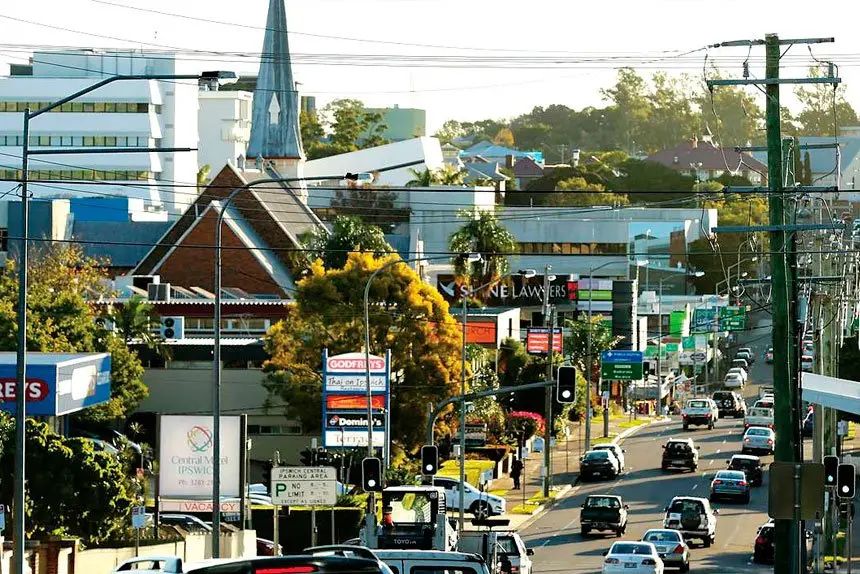
ONE in five Australians face inadequate access to doctors, schools, housing and basic infrastructure, new data from the National Growth Areas Alliance has revealed.
The research by the Australian Urban Observatory studied liveability indicators across growth areas including Ipswich and showed significantly lower rates of access to healthcare (48%) and education (21%), as well as important spaces and access across arts and culture (44%) and sports & leisure facilities (68%).
Ipswich Mayor Teresa Harding said the recent data was disappointing but not surprising given the lack of support from other levels of government in Ipswich.
“We have known for some time that Ipswich is not receiving the support it needs from other levels of government to sustainably manage the growth they are asking our city to accommodate,” she said.
“This is one of the reasons why council ran its recent We Can’t Wait advocacy campaign, to start a conversation with the Australian and Queensland governments about the under-funding of essential infrastructure in our region.
“‘We Can’t Wait’ was successful in pushing for key commitments to critical infrastructure that have otherwise been waiting for investment for years, and in some cases decades.
“The commitments from both major parties to finally progress a second inner-city crossing for Ipswich is a great example of this.
“Ipswich will grow faster than any other council in Queensland in the next 20 years.
But Mayor Harding said that unfortunately the government funding received was simply not keeping pace with this rapid growth.
“This puts incredible pressure on council, and ultimately the Ipswich ratepayer, to either pick up the tab for critical infrastructure or see an increase in the negative impacts of growth such as traffic congestion, unsafe roads and urban sprawl,” she said.
However, State Member for Ipswich Jennifer Howard said that when the Miles Government was in power, infrastructure was delivered for Ipswich.
“The former Queensland Labor Government was committed to delivering essential infrastructure for Ipswich,” Ms Howard said.
Especially in growth suburbs including Ripley Valley.
“In four short years, the Ripley Valley has seen the delivery of a new ambulance station and three new schools. There is a new police station under construction, and the new Ripley Satellite Hospital which will soon include a new 90-bed sub-acute health facility.”
In response to the findings, the National Growth Alliance launched a new funding model at Parliament House last Thursday.
Queensland is the worst state when it comes to the largest gap in access to government-run primary and secondary schools, childcare and out of school hours care, reaching a figure of 27.4%.