AUSTRALIANS are spending more time, travelling longer distances, and forking out higher costs to get to work, according to the Real Australian Commute Report 2025.
The nationwide survey of more than 5000 commuters found the average daily commute has stretched to 64 minutes – up 10 minutes since 2022 – with workers now covering 37 kilometres a day, compared with 32 kilometres three years ago.
And it’s not just time that’s ticking up.
The average commuter is now shelling out $19.10 a day in out-of-pocket costs, while annual vehicle maintenance for car owners has jumped from $2015 to $2298.
Cars remain king on Australian roads, with almost two in three people (64 per cent) driving to work.
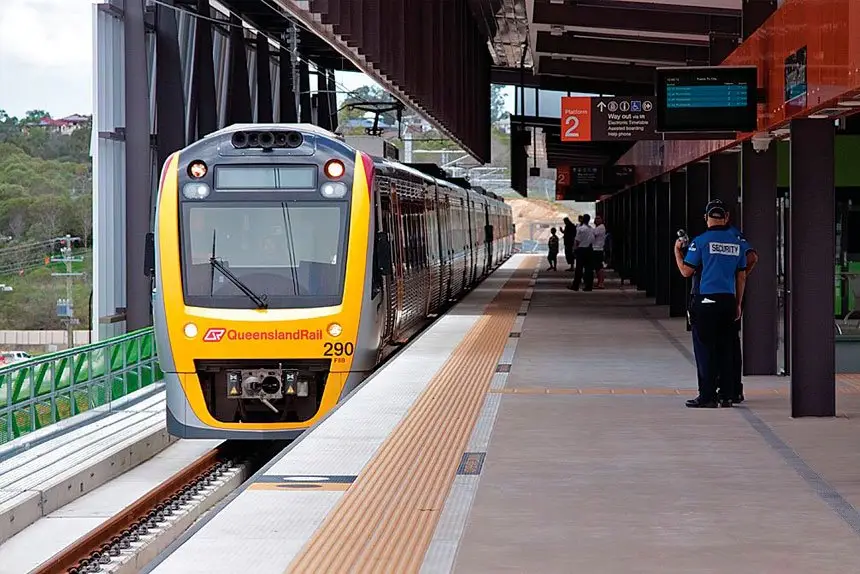
However, train travel has seen the biggest boost, up from 21 to 30 per cent since 2022.
Springfield commuter Ryan (surname withheld) said rail travel – and the permanency of 50-cent fares – had made his workday easier.
“Getting on the train at Springfield Central allows me to do some work or listen to music during my morning commute,” he said.
“Fifty-cent fares have saved me money, as I commute four days a week.”
Bus use, walking, rideshare and tram travel have held steady, while the number of people using non-electric bikes or scooters has dropped from 8 to 6 per cent.
Bundamba resident Michelle (surname withheld) said location was key to keeping costs down.
“I don’t have to travel far, and living on the bus route helps me get to work easily in Booval,” she said.
The cost-of-living crisis continues to shape how Australians move. More than seven in 10 respondents (71 per cent) said financial pressures affected their commuting decisions, and nearly two in three (62 per cent) described commuting as “expensive”.
“In outer-urban areas, cost pressures hit harder because driving often isn’t a choice – it’s a necessity,” said Dr Páraic Carroll, Lecturer in Transport Planning.
“We’re seeing forced car ownership, a symptom of transport disadvantage that’s deepening under the current cost-of-living crisis.”
Among hybrid workers, nearly two-thirds (64 per cent) said they’d consider switching jobs if forced to return to the office full time – proof that flexibility remains high on the wish list for working Australians.
For drivers, traffic congestion remains the top frustration, with 59 per cent of respondents highlighting it as impactful to their day.