
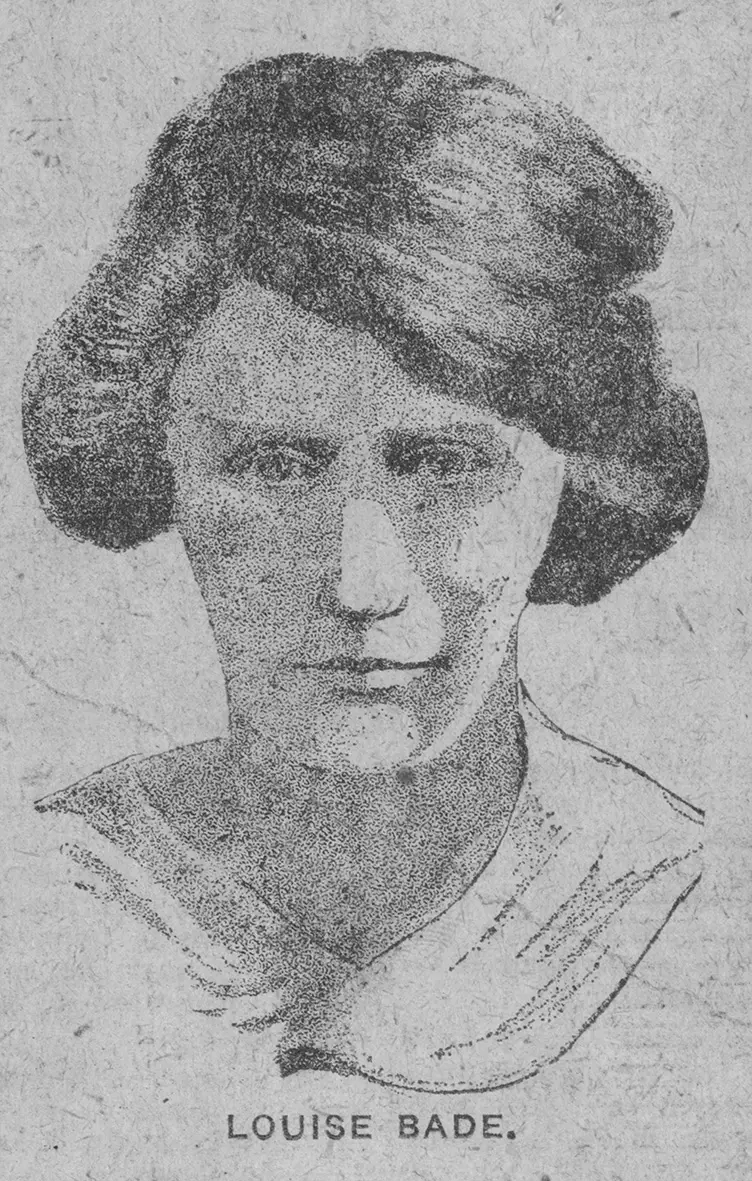
THIS week marked 100 years since the tragic death of death of Louisa Bade with her lifeless body found at Ebenezer, near Rosewood, on 10th of June 1926.
Her murder sent shock waves through Ipswich and Brisbane with the callous death of a young girl approaching adulthood, creating an unfortunate and enduring tale.
Found lying in pools of her own blood, several yards from the crossroads where the seven months pregnant girl was attacked, it was clear to law enforcement what the motive was, and a vague picture of the incident had begun to form.
“…she had not died instantly, the horror of her death imprinted forever on the features of her face… She looked like broken doll, discarded, tossed away.”

Devoted member of an immigrant Lutheran community, Louisa Bade was greatly mourned by her community and family, with the local pastor and law enforcement worried about those closest to her taking justice into their own hands.
The callous killer, Alan Christopher Jeynes, the father of Lousia’s unborn child, had betrayed his wife and children and the Bade family, his neighbours making the crime even more scandalous and evil.
The greatest issues faced by the detective at the time were limited resources and primitive technology by today’s standards, not having anything modern investigators take for granted.
As the murder had occurred in the rural community of Ebenezer, the train journey itself, undertaken by the detective and Indigenous tracker George Munro had taken a long time, merely to get to the crime scene. Simple processes such as making plaster casts of footprints, and organising riders to time the trail, would require patience with the results taking days, if not weeks.
However, the police were only gathering their evidence: the culprit was well within their sights, as early as the funeral on June 12th, just two days after the body was found.
At her funeral, Jeynes was one of the pall bearers.
It was discovered during investigation that Jeynes had groomed his victim, forming a relationship that was deeper than on the surface. Lingering glances, improper introductions, awaiting her company on her route to deliver cream.
Jeynes response to her falling pregnant was cold, calculating and remorseless. When police took Jeynes to the crime scene: “he whistled in the car on the way…”
A century later, the issue of violence against women remains a national shame with the cautionary tale of Lousia Bade told in the pages of “HORSE TRACKS AND STIRRUP IRONS: Death Comes to Ebenezer” by Murder Trails Series author and Lady Crime Writer Caroline Stevenson & available at jacksim.com.au.