

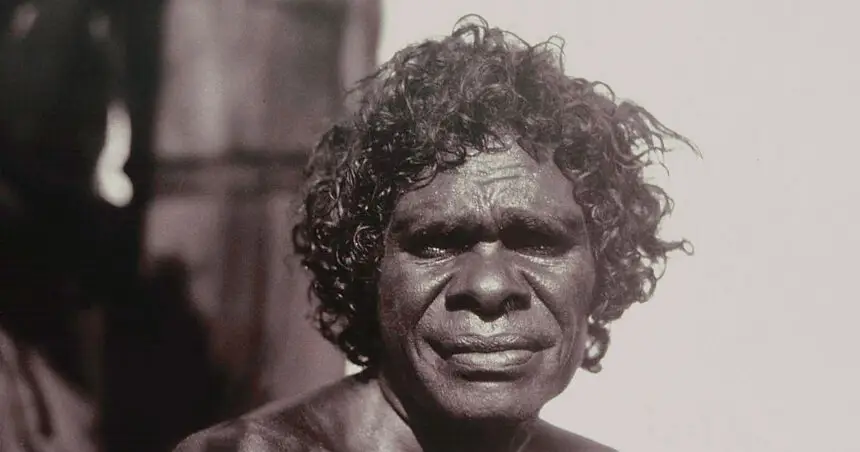
RECENTLY, I watched one of the most remarkable documentaries about First Nations Australians that I have ever seen.
Dhakiyarr versus the King is the story of the first case ever heard by the Australian High Court involving an Aboriginal person. It is a remarkable story of profound injustice that occurred in the Northern Territory in 1932.
In 1934, Dhakiyarr, a Yolngu man, was charged with the murder of police constable Albert McColl. The incident occurred at Woodah Island near Arnhem Land.
He was sentenced to death by the Supreme Court of the Northern Territory, despite the fact that he couldn’t speak English and tell his side of the story.

His sentence was later quashed by the High Court of Australia, which found his conviction to be a serious miscarriage of justice.
However, Dhakiyarr disappeared without trace immediately after his release from Darwin gaol and it is believed that he was murdered by vengeful police.
The incident started in September 1932 when five Japanese fishermen were killed in a skirmish. After the deaths, a party of police was commissioned to investigate the circumstances.
The police party went to Woodah Island, where they encountered a group of Aboriginal women. Without knowing if they were connected to the murders, the women were apprehended and chained by the neck, which was common police practice in that era.
Dhakiyarr returned from a hunting trip to find his wife chained by McColl and being taken away. In response, Dhakiyarr threw a spear, killing McColl, and then released his wife.
The killing of a white policeman caused a national sensation, in an era when there was strong antipathy towards Aboriginal people. Dhakiyarr was quickly arrested, tried and sentenced to death.
This sentence was not translated for Dhakiyarr and was handed down despite a plea for mercy by the NT protector of Aborigines.
This caused a national outcry, which resulted in the case being taken to the High Court of Australia, which quashed the conviction and ordered his release.
The most remarkable part of Dhakiyarr ‘s story occurred in 2003, when Dhakiyarr’s descendants invited McColl’s descendants to a reconciliation ceremony at Darwin Courthouse.
The documentary records the full event, attended by 38 descendants of McColl, around 200 descendants of Dhakiyarr and several High Court judges.
The scene displays an amazing blending of cultures, with many of Dhakiyarr ‘s descendants in traditional ceremonial dress and body paint, McColl’s descendants in western clothes and the High Court Judges wearing full gowns and wigs. The scene is complemented by nine large ceremonial totem poles that were specially prepared for the occasion.
The emotional climax of the ceremony is the ceremonial breaking of the spear, performed by the Aboriginal dancers. This signifies the cessation of enmity and the start of reconciliation between the two groups.
Today, the nine ceremonial totem poles still stand in the forecourt of Darwin’s Supreme Court, as a lasting legacy and symbol.