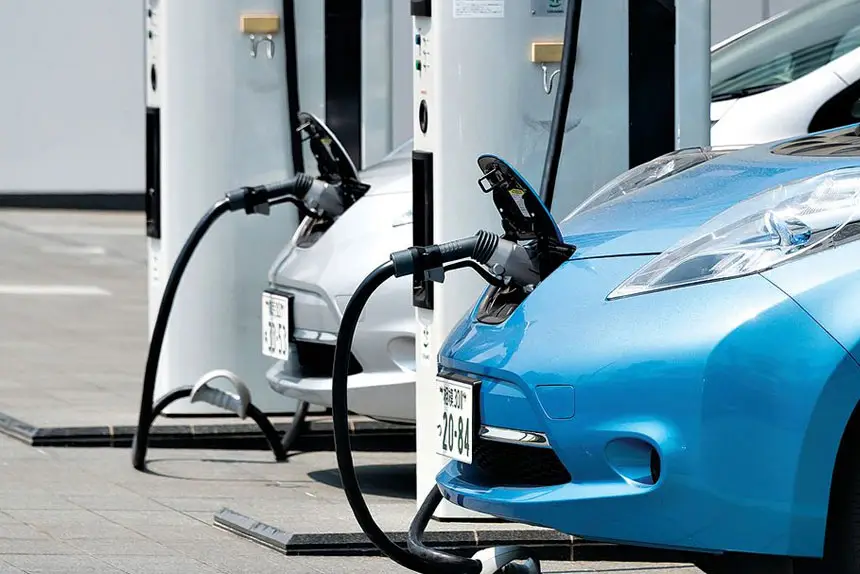
AUSTRALIA’S electric vehicle boom could stall if the Federal Government winds back the Electric Car Discount – a policy that has made EVs more affordable to buy, cheaper to run, and attainable for everyday drivers, including those on Ipswich roads.
Once a rarity, the quiet hum of electric vehicles is now a familiar sound across Ipswich.
EVs are increasingly common at local shopping centres, school drop-off zones and along major commuter routes such as the Cunningham and Centenary highways, reflecting a broader national surge in electric car uptake.
For many Ipswich motorists, the decision to go electric has been driven less by trend than by practical realities – rising fuel prices, long commutes and household cost pressures.
Uber driver Amy Fisher experienced the benefits firsthand after driving a Polestar on loan while her hybrid was being repaired. She has since switched to a Kia EV5.
“For my needs, it just makes sense – financially and practically,” she said.
Local resident Vanessa Shinkfield, who bought her Polestar 2 in early 2022, said environmental concerns and long-term value were key motivations.
“Once they’re on the road, EVs are far more environmentally friendly,” she said. “I love the performance, and I plan to keep the car long-term – even replacing the batteries when the time comes.”
Long-time EV owner Jason Giffen said necessity, not novelty, prompted his switch.
After commuting two hours a day and spending heavily on petrol, he moved from a plug-in hybrid to a BYD Dolphin. With solar panels at home, his transport costs have dropped dramatically.
“We’re talking roughly $5 in lost solar export per 1000 kilometres,” he said. “That kind of saving changes how you think about energy and bills altogether.”
In 2025 alone, 157,000 electric vehicles hit Australian roads – a 38 per cent increase on the previous year.
December marked a milestone, with EVs accounting for 16.7 per cent of all new vehicle sales in a single month.
Industry groups warn this progress could be jeopardised if the Government winds back the Electric Car Discount, which removes fringe benefits tax on eligible electric vehicles.
The policy has cut thousands of dollars off annual ownership costs, making EVs accessible to working Australians and accelerating the shift away from petrol and diesel.
EVC Chief Executive Julie Delvecchio said the review comes at a critical moment for Australia’s transport transition, with policy certainty needed to maintain momentum towards the national target of five million EVs on the road by 2035.
“The Electric Car Discount has helped take Australia from an EV trickle to a real market for people who want cleaner cars and to save up to $3000 a year on fuel and maintenance,” Ms Delvecchio said.
The discount has also boosted the second-hand EV market, with off-lease vehicles flowing into used car yards.
Ms Delvecchio said the latest figures point to a lasting shift in consumer behaviour.
“Australians are choosing EVs because they’re cheaper to run, cleaner and quieter – and because the options have never been better,” she said.