
ONE surviving beehive has given Ipswich beekeeper Garvan Cannon hope that nature may have found its own defence against the devastating varroa mite.
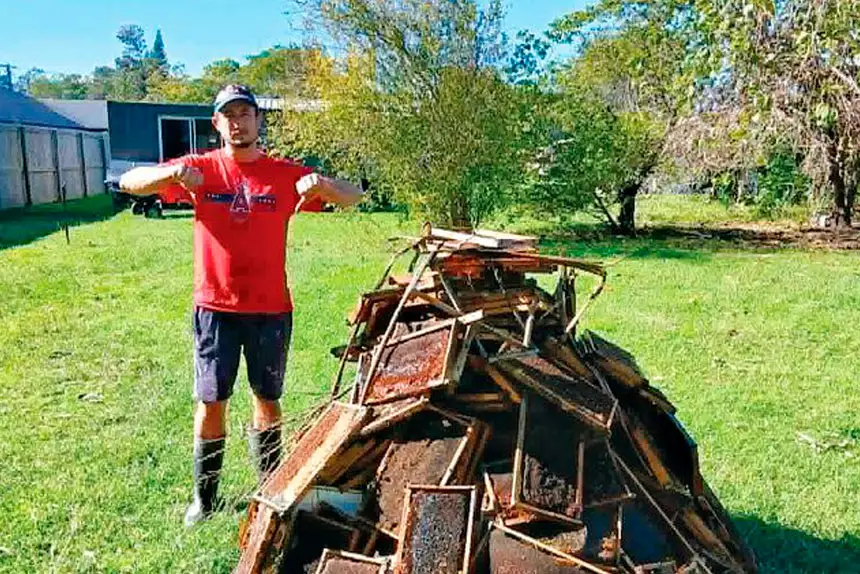
Just a few years ago, Mr Cannon managed 33 European honey bee hives and six native bee hives, producing honey for family and friends while pursuing a hobby that had become an obsession.
Today, only one hive remains.
His beekeeping journey began almost a decade ago with a handful of native stingless bee hives to pollinate his backyard fruit garden, before a chance meeting with veteran beekeeper John Whepal changed everything.

Mr Whepal, who has kept bees from the age of nine and at one stage managed about 1000 hives, became Mr Cannon’s mentor.
“He basically took me under his wing as his apprentice,” Mr Cannon said.
“He taught me everything he had learnt from his time in beekeeping. He was a walking encyclopedia of what to do and what not to do with bees.”
When varroa mite was detected in Australia in 2022, Mr Whepal warned of the devastation it would bring.
“I didn’t think it was as doom and gloom as he made out, but looking back, he was right – as usual,” Mr Cannon said.
That prediction became reality as Mr Cannon watched colony after colony collapse.
“To say I felt devastated is an understatement,” he said. “I can’t even put into words the sinking feeling of opening up the hives to find they were gone.
“One by one it was the same for each lid I lifted.”
Persistent wet weather across Ipswich and the Lockyer Valley made treating and monitoring the colonies even more difficult, leaving Mr Cannon hoping a solution could be found before it was too late.
Against the odds, one colony survived, with Mr Cannon believing it may possess natural traits that make it more resistant to varroa.
“I’m hoping they are genetically different in some way,” he said.
“There are reports from around the world of bees displaying grooming behaviour, almost like monkeys cleaning mites from each other.
“There are also bees that show intense hygienic and defensive behaviours that naturally suppress mite populations.”
If the colony survives winter, Mr Cannon plans to split the hive to gradually rebuild his apiary, hoping any natural resistance is passed on, a rebuild he estimates could take close to a decade.
“The flow-on effect to agriculture hasn’t even been properly understood yet,” he said.
“With spring vegetable season around the corner and so few pollinators left, I think people will start to understand this affects everyone.
“We are resilient, and we know how important the bee is to the survival of humanity.
“I believe we can and we will rebuild.”
For Mr Cannon, that resilience comes from the bees themselves.
“They’ve taught me not to give up,” he said.
“When you see how much work this tiny insect puts into its hive during such a short lifespan, it mirrors the
determination and work ethic that beekeepers show in return.”