
WITH the Great Australian Bird Count taking place last week, Ipswich once again has another crowd making plenty of noise across the city.
With an impressive 277 recorded bird species, Ipswich is home to a remarkable variety of feathered residents, from familiar backyard favourites to elusive visitors that would have even experienced birdwatchers reaching for their binoculars.
Among the more unusual visitors are the cotton pygmy-goose, spotted around Springfield Lakes, and the speckled warbler, an elusive little character found at White Rock Conservation Reserve.
The cotton pygmy-goose might sound like something dreamed up for a children’s storybook, but this small waterbird is a genuine rarity in Queensland.

With its striking white plumage and glossy green back, the male is particularly distinctive, while the female sports a darker stripe through her eye and a prominent white eyebrow.
Meanwhile, the speckled warbler prefers to keep a considerably lower profile, spending much of its time rummaging through leaf litter in search of insects and seeds.
But you don’t need to be a seasoned twitcher to appreciate Ipswich’s birdlife.
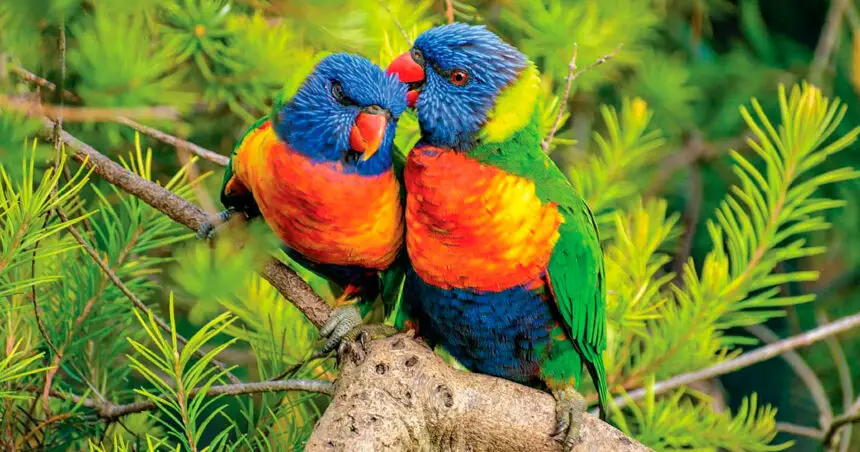
Just minutes from the CBD, Denmark Hill Conservation Reserve has recorded 54 species, including Australian king-parrots, rainbow lorikeets, pale-headed rosellas and scaly-breasted lorikeets.
And if birds of prey are more your style, Colleges Crossing offers the chance to look skyward for whistling kites, black kites, grey goshawks and the impressive white-bellied sea eagle.
At White Rock Conservation Reserve, birdwatchers have recorded 138 species, including rainbow bee-eaters, rose robins and three varieties of fairy-wren.
The reserve is regarded as one of Ipswich’s premier birdwatching destinations, with seasonal changes offering something different throughout the year.
Closer to Springfield, the lakes attract an assortment of waterbirds, including pelicans and cormorants.
And in a region increasingly defined by new housing estates, expanding roads and rapid population growth, Ipswich’s birdlife offers a reminder of the natural treasures worth protecting.
So next time you hear a rustle in the bushes, a whistle from the treetops or a commotion around the backyard birdbath, take a closer look.
You might just discover that some of Ipswich’s most fascinating locals have feathers.
Australia’s Top 10 Birds of 2026
- Tawny Frogmouth – The ultimate master of disguise and often mistaken for an owl.
- Baudin’s Black Cockatoo – A rare Western Australian beauty, recognised by its powerful beak and striking white tail panels.
- Gang-gang Cockatoo – The bird with a call like a creaking door. Males have brilliant red heads and distinctive crests.
- Willie Wagtail – Small, fearless and bursting with attitude.
- Bush Stone-curlew – Australia’s spooky night-time screamer.
- Laughing Kookaburra – The original bush comedian.
- Southern Emu-wren – Tiny but spectacular.
- Spotted Pardalote – A pocket-sized splash of colour.
- Wedge-tailed Eagle – The king of Australian skies.
- Little Penguin – Small in stature, big on charm.