
IPSWICH is positioning itself as Queensland’s future manufacturing and defence capital, backed by a massive pipeline of industrial land and a growing economy primed for investment.
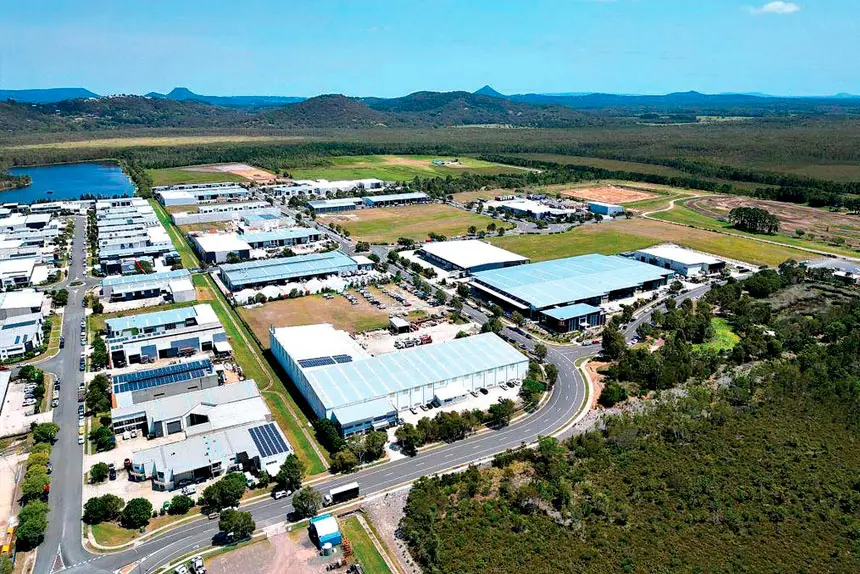
With nearly 8000 hectares of future industrial land supply, more than any other local government area in South East Queensland, Ipswich City Council has laid out its vision in a new investment prospectus, The City of Ipswich: Space to Grow.
Ipswich Mayor Teresa Harding said the city’s scale, location and workforce made it uniquely suited to attract advanced manufacturing, defence, logistics and innovation industries.
“Ipswich is in a prime position to help bring manufacturing back to Queensland and Australia,” Mayor Harding said.

Already home to major national and global operators including Goodman Group, Coles, Suntory Oceania, JBS, Rheinmetall and L’Oréal Groupe, Ipswich continues to attract significant investment.
Additional major players such as Officeworks and Asahi are currently developing large-scale facilities in the region.
Manufacturing and defence are already Ipswich’s economic backbone, contributing around 60 per cent of the city’s $8 billion in annual exports.
Mayor Harding said Ipswich’s 7923-hectare industrial land pipeline is larger than the combined supply of other South East Queensland councils – a critical advantage as land shortages loom across the region.
“The region overall is facing challenges when it comes to industrial land supply, with Brisbane predicted to run out in a matter of a few years,” she said.
“Ipswich stands ready to meet the needs of a wide range of industries. We have a proud manufacturing history, and it remains one of our largest employers.”
Beyond land availability, Ipswich’s economic fundamentals are also driving interest.
The city’s population of 270,000 is forecast to exceed 500,000 by 2046, supported by strong residential growth.
Ipswich also boasts a younger-than-average demographic and a workforce that continues to expand alongside the city.
Ipswich’s economy is currently valued at $15 billion, growing at 4.2 per cent annually, with more than 13,000 businesses supporting around 95,000 jobs.
Through its Economic Development Incentive Policy, Ipswich City Council is actively targeting high-value projects that drive job creation and long-term economic growth.
Jess Caire, from the Property Council of Australia, said Ipswich was well placed to lead the next wave of industrial growth.
“Ipswich’s scale, land availability and industrial capability position it as a natural home for Queensland’s next phase of manufacturing and defence investment,” Ms Caire said.
“As pressure builds on industrial land supply across South East Queensland, Ipswich stands out as one of the few locations able to accommodate major employers at the scale they need.”
Ipswich City Council is encouraging businesses and investors to explore opportunities through its Space to Grow prospectus.