MAYORS and councillors will be handed back the right to speak publicly on issues without bureaucratic interference under sweeping reforms to be introduced by the State Government.
The move – hailed as a win by both Ipswich Mayor Teresa Harding and her opponents in the Ipswich City Council – will remove “layers of red tape” and legislate that mayors are the official spokespersons for their councils, Premier David Crisafulli told last week’s Local Government Association of Queensland conference.
“You will do so without the hand of bureaucracy stopping you from commenting on the things that matter to your community,” Mr Crisafulli said.
Proposed changes to the Local Government Act will also strip back the powers of the councillor conduct watchdog, the Office of the Independent Assessor (OIA), to focus only on serious misconduct and corruption.
The reforms come amid growing frustration over costly and drawn-out OIA investigations, including one involving two Ipswich councillors that cost ratepayers $42,992, plus the costs of legal representation for the councillors, the OIA’s full investigation process and council officers’ time.
A three-year probe into Deputy Mayor Nicole Jonic and former Governance Committee chairman Jacob Madsen was dismissed by the Councillor Conduct Tribunal, which found no wrongdoing.
The tribunal criticised the OIA’s handling of the case, saying there was “no aspect or element of dishonesty” in the councillors’ actions.
Ipswich councillors have long criticised the OIA, joining the LGAQ and other councils in calling for change.
In another matter, an investigation into comments by Cr Andrew Antoniolli about food vendors at Tulmur Place cost almost $19,000 before he was cleared.
Mr Crisafulli said the changes would stop elected representatives being bogged down by “vexatious and nonsensical claims”.
“For those who do the wrong thing, there are bodies to hold you accountable,” he said.
“But if you’re not breaking the law, you should be free to do your job.”
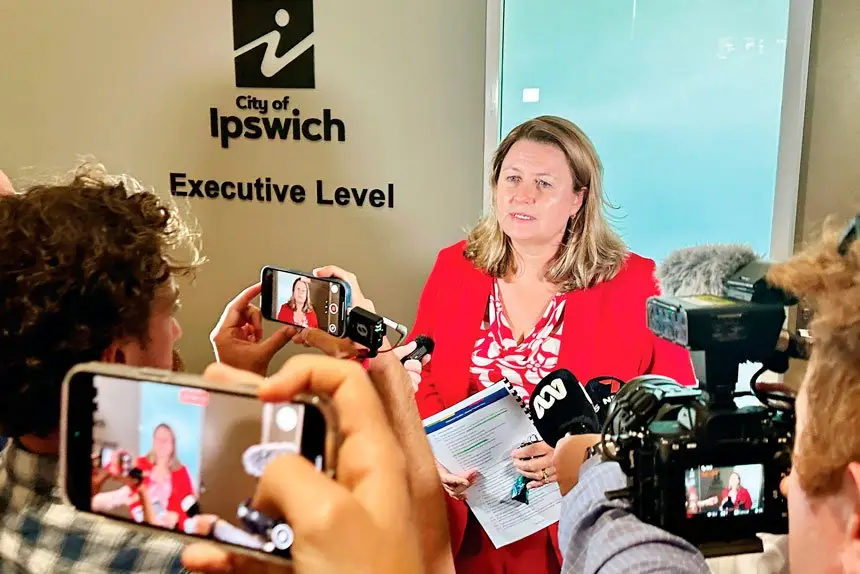
Mayor Harding claimed part of the Government’s plan as a personal victory, saying it fixed flaws that allowed councillors to weaken the powers of democratically elected mayors.
She pointed to a January motion from Councillor Paul Tully proposing committee chairs act as lead spokespeople on issues relating to their committees – a move she labelled a “gag” on the mayor.
“It is unfortunate that Ipswich City Council once again continues to drive local government reform for all the wrong reasons,” she said.
“However, it is important that these changes are made to ensure it is harder than ever for those who seek to use their position as a councillor against the interests of the community.”
Cr Tully said there had never been any gag or proposed gag on the Mayor’s ability to speak on any local government issue in Ipswich.
“(A mayor’s role as official spokesperson) was always the understood position of all of the State’s 77 mayors but never put into legislation,” Cr Tully said.
Ipswich City Council had recognised committee chairs as the spokesperson and the Mayor as the lead spokesperson on citywide issues for the past three decades under former mayors John Nugent and Paul Pisasale.
The changes in the proposed motion, which was withdrawn, added conditions to the Council’s media policy making the committee chairpersons as spokespersons.
“(The Mayor) would be the spokesperson on major matters and also under several provisions under the motion or the legislation.”