BUILDING a home with natural ventilation can significantly reduce energy costs while improving indoor air quality.
Natural ventilation harnesses wind and thermal buoyancy to circulate fresh air through the house, providing cooling without the need for mechanical systems.
Several factors need careful consideration when designing a home for optimal airflow, including window placement, building materials, and the positioning of the house itself.
WINDOW PLACEMENT AND DESIGN
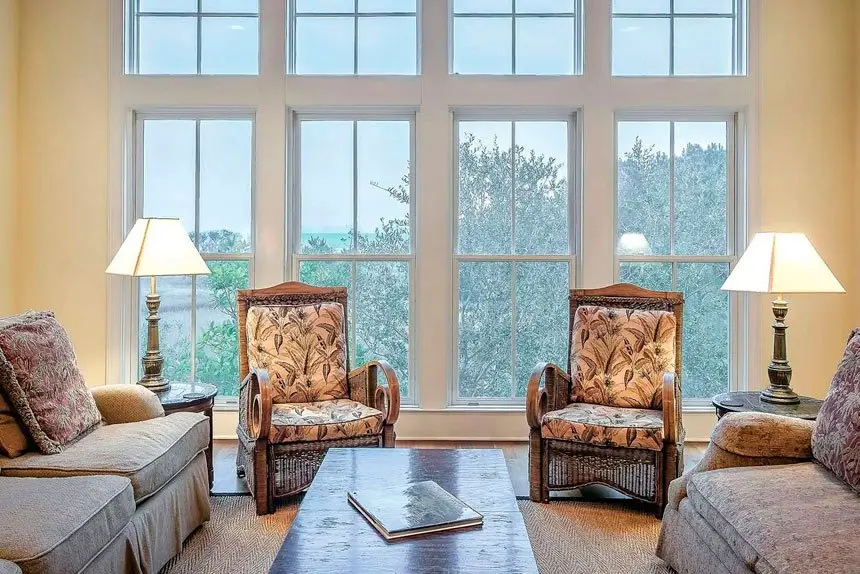
Windows play a crucial role in natural ventilation. For effective airflow, windows should be strategically placed on opposite sides of the house to create a cross-ventilation effect, where air enters through one side and exits through the other. Operable windows – those that can open fully – are ideal, especially when combined with larger openings like sliding doors or louvered windows. The height of the windows also matters. High windows help expel warm air, while lower windows bring in cooler air.
The size of the windows is another key factor. Larger windows on the windward side (facing the prevailing wind) will draw in more air, while smaller windows on the leeward side allow for better control of air release, ensuring efficient ventilation.
HOUSE POSITIONING
The position and orientation of the house are essential in capturing the wind. Ideally, the house should be positioned so that its longer sides face the prevailing winds, maximizing the airflow through the home. Avoiding obstructions like trees or neighboring buildings that could block the wind is important for maintaining an unobstructed path for air circulation.
MATERIALS AND ROOF DESIGN
Lightweight, breathable materials like brick, timber, or straw can improve airflow within the home.
Additionally, roofing materials that don’t trap heat, such as reflective roofing or green roofs, can keep the house cooler and encourage natural convection. Roof vents can also be added to help release hot air, particularly in warm climates.