
Realestate.com.au
Queensland’s housing affordability crisis is fundamentally reshaping the way families live, with a growing number of households forced to combine under one roof as soaring property prices outpace incomes.
New data shows demand for homes designed to accommodate extended families has surged dramatically over the past year.
Searches for dual-occupancy properties have jumped 385 per cent, while interest in dual-living homes has doubled and “granny flat” searches have risen by 30 per cent.

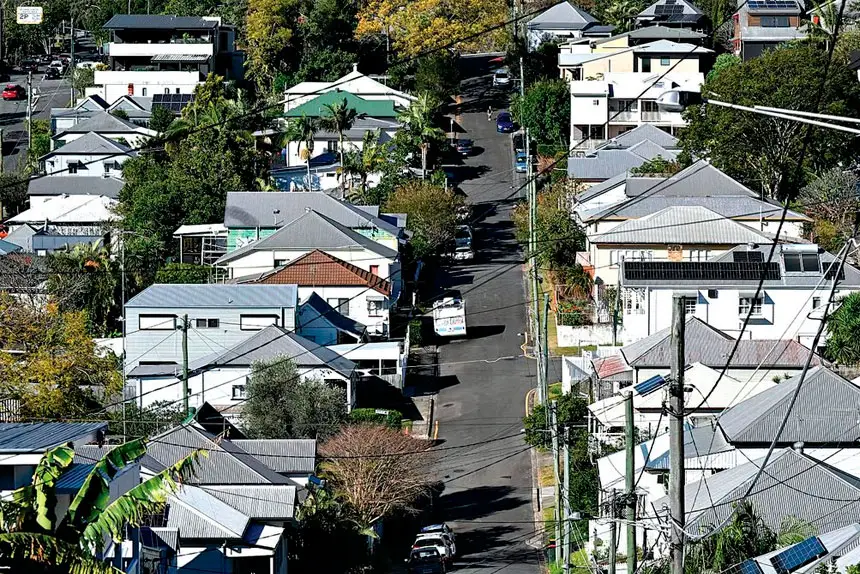
The shift is most visible across Brisbane’s outer suburbs and growth corridors, where larger block sizes and relatively lower prices are enabling families to adapt.
Areas across Logan, Ipswich and the city’s northside are emerging as key hotspots, as buyers prioritise flexibility and shared living arrangements.
Property analysts estimate that between 10 and 12 per cent of Queensland households – up to 800,000 adults – are now living in multi-generational setups, a figure expected to climb sharply in the coming decades.
Chief economist Diaswati Mardiasmo said the trend, once more common in migrant communities, had broadened significantly as financial pressures intensified.
“Multi-generational living has shifted from being a lifestyle choice to, in many cases, a necessity,” she said.
“The drivers remain consistent – housing affordability, cost of living and caregiving – but what has changed is the scale. For many households, this is now the only viable pathway into or within the housing market.”
Mortgage brokers report a parallel rise in shared ownership structures, with families increasingly pooling incomes to meet lending requirements that would be unattainable individually.
Single-income borrowing capacity has been eroded by rapid price growth, particularly in Queensland where property values have surged faster than local wages. In response, buyers are turning to co-borrowing arrangements with parents, siblings or adult children to improve serviceability.
This shift is also influencing the types of properties in demand. Buyers are actively seeking homes that balance shared financial benefits with personal privacy – including properties with separate entrances, self-contained living areas and purpose-built secondary dwellings.
Industry experts say the market is already responding. New home designs are increasingly incorporating multi-generational features from the outset, while developers and planners are exploring dual-living layouts, duplex-style builds and adaptable housing models that can evolve with changing family needs.
However, the trend remains heavily dependent on detached housing, with the vast majority of multi-generational households occupying standalone homes.