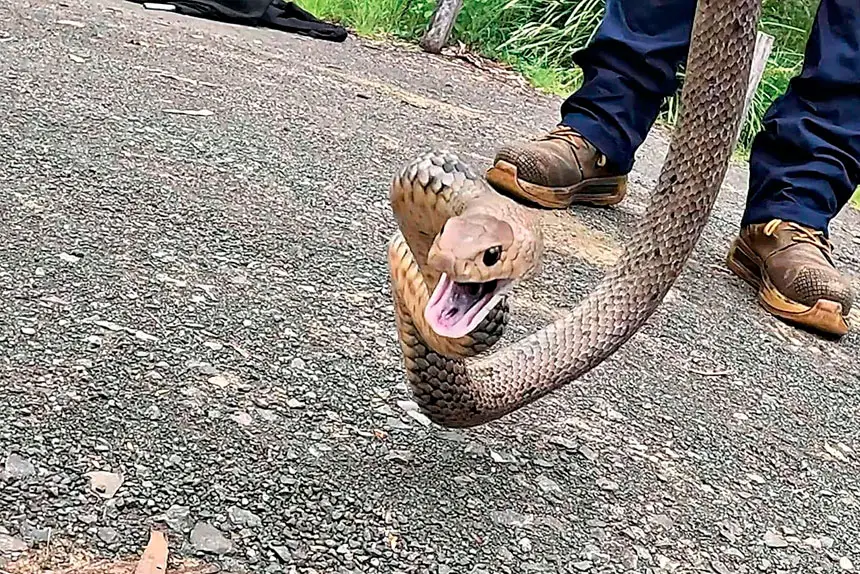
EASTERN Brown snake bites in pets are rising across Ripley and surrounding suburbs, and vets say the danger is turning up where families least expect it – in suburban backyards, just beyond the back door.
Vets stress that speed is everything when it comes to snake bites. Pet owners are being urged to contact their nearest veterinary clinic immediately if a bite is suspected and to check whether snake detection kits and antivenom are available.
Snake catchers working across Ipswich say the surge in suburban encounters is no coincidence.
Kurt and Nat Whyte from Ipswich Snake Catchers say ongoing urban development is steadily pushing snakes into residential areas as natural bushland gives way to new housing estates.
“While overall call-out numbers have remained fairly steady, the locations have changed,” Nat Whyte said.
“Residential areas now offer everything snakes need – water sources, shelter and a reliable food supply. Backyards with long grass, garden debris or rodent activity are particularly attractive.
Ms Whyte said snakes in the Ipswich region are most active during warmer parts of the day and are often seen basking, although residents should not assume the risk ends after dark.
“There are several nocturnal species in South East Queensland, meaning snakes can also be active at night,” she said.
With warmer weather driving increased movement, residents are being encouraged to take simple but effective steps to reduce the risk around their homes. Keeping yards tidy, clearing piles of timber or debris, removing loose materials, cleaning bird enclosures and avoiding leaving pet food outside can all help reduce rodents – a primary food source for snakes.
Pet owners are also being urged to remain vigilant during daily routines. Vets warn that dogs and cats are most often bitten when investigating long grass, dense bushes or garden beds, where snakes seek shade and shelter.
If a snake is encountered, residents are advised to remain calm, keep a safe distance and immediately remove pets and children from the area. A licensed snake catcher should be contacted for safe relocation.
“If it’s safe to do so, keeping visual contact with the snake can be extremely helpful for catchers when they arrive,” Ms Whyte said.
Residents are reminded never to approach or attempt to handle a snake. If safe, a photo taken from a distance can assist with identification, while everyone – including pets – should remain indoors until the snake has been professionally removed.
As summer conditions continue, the message from vets and wildlife professionals is clear: snakes are active, close to home, and awareness – not panic – is the community’s strongest defence.