

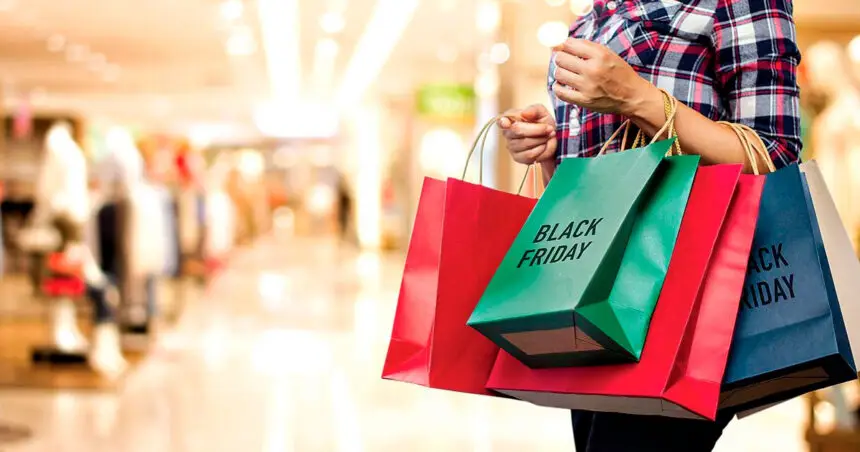
THE story behind Black Friday is not quite as straightforward as retailers would have shoppers believe.
Although the modern-day event is often associated with businesses moving from operating at a loss to making a profit – going from being “in the red” to “in the black” – the origins of the name are actually rooted in traffic chaos, overcrowded streets and frustrated police officers in the US.
The term dates back to Philadelphia in the 1950s and 1960s, when police began using “Black Friday” to describe the mayhem that descended on the city on the day after Thanksgiving.
Thousands of shoppers flooded the streets ahead of the annual Army-Navy football game, creating enormous traffic jams, packed footpaths and extra headaches for police, who were required to work extended shifts to manage the crowds.

The combination of holiday shoppers and football fans made for an especially chaotic weekend, with shoplifters also taking advantage of the crowds.
By 1961, the term had become so well established in Philadelphia that local retailers attempted to give it a more positive spin, suggesting “Big Friday” as an alternative. The rebranding failed to stick.
It would take another couple of decades before Black Friday became the retail celebration recognised around the world today.
During the 1980s, retailers embraced a different explanation for the name, promoting the idea that the huge volume of sales on the day helped businesses move from the “red” of financial losses into the “black” of profitability.
By the late 1980s and early 1990s, Black Friday had spread beyond Philadelphia and become an established fixture of the American Christmas shopping season.
Traditionally held on the Friday immediately following Thanksgiving, Black Friday marked the unofficial beginning of the American Christmas shopping season.
For retailers, it was the perfect opportunity to attract shoppers looking to get ahead on Christmas presents, while consumers were encouraged by limited-time promotions and heavily discounted merchandise.
The event soon became famous for extraordinary scenes of shoppers lining up outside department stores before sunrise, sometimes camping overnight.
Retailers competed to offer so-called doorbuster deals, with limited quantities of heavily discounted products designed to get customers through the doors.
The rise of online shopping added another dimension to the phenomenon.
Cyber Monday emerged in 2005 as a way of encouraging consumers to shop online following the Thanksgiving weekend, initially targeting shoppers returning to work with access to faster internet connections.
What began as a single-day shopping event had evolved into an extended retail weekend, with Black Friday, Small Business Saturday and Cyber Monday becoming major dates on the international shopping calendar.
Today, many retailers stretch promotions across several weeks, with the traditional Black Friday sale increasingly becoming a Black November campaign.
Australia does not celebrate Thanksgiving, but that has not stopped Black Friday from becoming one of the country’s biggest retail events.
According to the Australian Bureau of Statistics, Black Friday sales first gained a foothold in Australia a little over a decade ago, initially through a small number of online retailers borrowing the American promotional concept.
The event gathered momentum around 2017, when more mainstream online businesses and traditional bricks-and-mortar retailers began getting involved.
It is now common to see retailers promoting sales across the week, the weekend and even longer, with online and physical stores involved.