

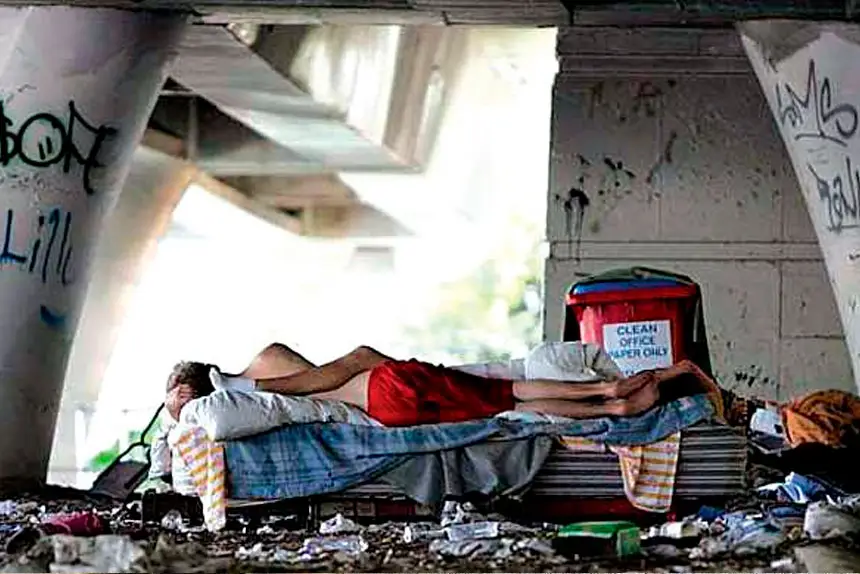
THE face of homelessness in Ipswich is changing, with frontline services struggling to keep up with demand for specialist homelessness services that have risen by 63 per cent in the region over the past six years.
No longer confined to rough sleepers or people battling addiction, homelessness is increasingly affecting working families, older women, domestic violence survivors and parents with young children who have been priced out of the rental market or forced from long-term tenancies.
Figures compiled by the Ipswich Housing and Homelessness Network show the number of people in the Ipswich local government area receiving support from specialist homelessness services rose from 1985 in the year ending June 2019 to more than 3200 in recent years.
For Tui Gordon, Program Manager of Ipswich Accommodation Support Service and East St Supported Accommodation with St Vincent de Paul Society Queensland, the figures confirm what she and other frontline workers are seeing every day.

“The face of homelessness has absolutely changed,” Ms Gordon said.
“It can be just an injury. You can’t work and you lose your job. A relationship breakdown. Or the house you’ve rented for years gets sold and suddenly there’s nowhere affordable to go.”
After more than seven years working in the sector and collaborating with housing and homelessness organisations across Ipswich, Ms Gordon said the crisis was no longer confined to society’s margins.
Perhaps the most heartbreaking sign of the times is one of the first questions her team now ask people seeking emergency assistance.
“It’s terrible when someone comes in and you ask them, ‘Have they got a car?’ Because then at least they’ve got somewhere safe to sleep,” Ms Gordon said.
The most alarming trend, she said, was the rise of hidden homelessness, whether it was the woman sleeping in her car in her workplace car park or another desperate call coming from a dedicated volunteer at a local charity shop who had been sleeping in her car at the Rosewood Showgrounds.
Those experiencing homelessness are increasingly people who have never needed help before, with the number of families seeking assistance growing.
“They just can’t break back into the market,” Ms Gordon said.
“And honestly, who can afford $700 a week rent on top of everything else?”
Domestic and family violence remains one of the leading drivers of homelessness, with Ms Gordon
saying some clients remain in unsafe relationships because there is simply nowhere else to go.
“We’ve got clients staying in unsafe relationships because they’ve got no other options,” she said.
For frontline workers, the emotional toll is mounting.
“Meanwhile, us at the frontline are constantly having to tell clients that come in, ‘We can’t help you,’” she said.
“We know you need this. We just can’t.”