
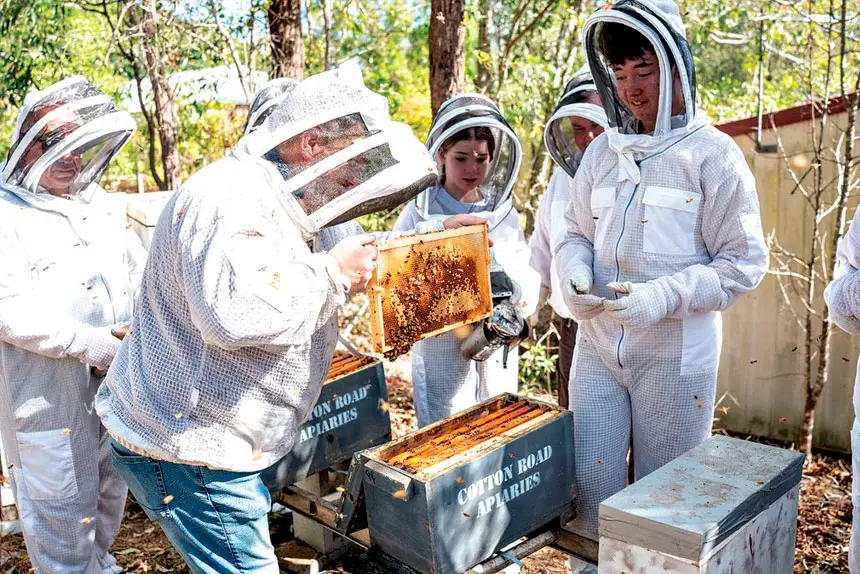
AUSTRALIA’S beekeeping industry knows it must adapt to life with the Varroa mite, but Bee All Natural’s Jason Roebig said preparedness alone will not protect commercial operators from mounting colony losses, treatment resistance and a potentially serious future pollination shortfall.
Bee All Natural has already suffered significant hive losses since the beginning of the year, and Mr Roebig conceded there was some truth to suggestions beekeeping businesses needed to restructure following the detection of Varroa mite in NSW in June 2022.
“Beekeeping changed fundamentally in June 2022, and adaptation has become essential, but suggesting businesses that did not restructure from that point were never going to survive risks placing responsibility for an unprecedented biosecurity event entirely on individual beekeepers,” he said.
Mr Roebig said the impacts in South East Queensland had been catastrophic, but he feared Australia did not yet understand the true scale of what resistant Varroa populations could mean for the industry.

“The real impacts across the eastern and southern states may not become apparent for several more months, particularly as seasonal conditions change, colonies build and mite populations increase,” he said.
Mr Roebig said Queensland’s experience had demonstrated how quickly conditions could deteriorate, pointing to the 2026 Pollination Security Status Report, which models a potential shortfall of 290,000 commercial honey bee hives during peak pollination periods.
“The 290,000-hive figure is a modelled potential future shortfall, not today’s deficit,” he said.
“But modelling is intended to give industry an opportunity to prepare before the shortage occurs.”
Around 35 per cent of Australian crops require bees for pollination and up to 75 per cent benefit from bee pollination, while the broader economic contribution of honey bee pollination has been estimated at about $14.2 billion annually.
Mr Roebig said priorities should include accelerated research into resistant Varroa, faster access to effective treatments, independent scientific expertise, breeding programs for resistant and resilient bees, surveillance, extension services, improved treatment options and pollination-security planning.
“When a commercial beekeeper loses hundreds or thousands of colonies within months, rebuilding isn’t simply purchasing another piece of equipment,” Mr Roebig said.
Mr Roebig said Australia was now entering what could prove to be its most important period since Varroa first arrived.
Despite the enormous challenges, Mr Roebig said rebuilding had already begun.
“There is enormous determination within this industry to recover,” he said.
“But we also need to be realistic. For many businesses, rebuilding to the strength they had before Varroa may never be achievable.
“We will rebuild, and many others will rebuild with us.”