

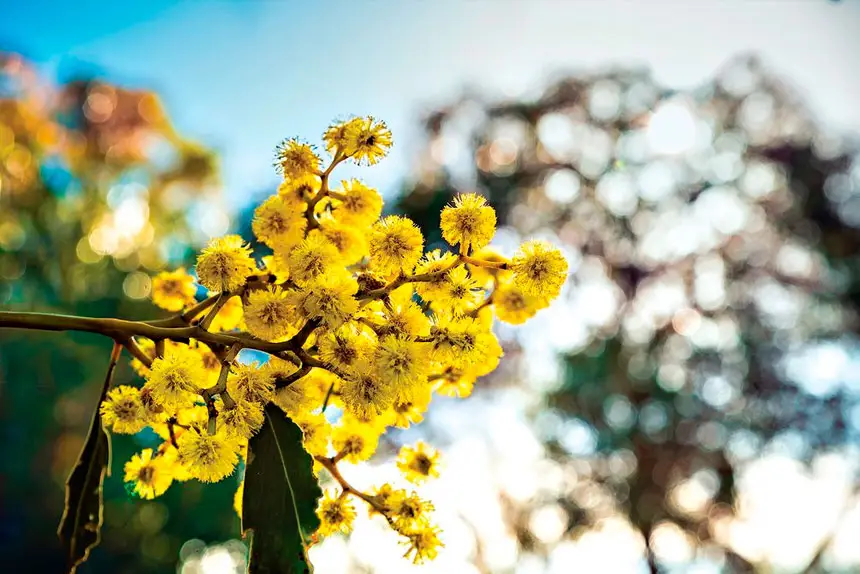
IF you noticed the Ipswich Civic Centre and buildings around Nicholas St lit up in green and gold recently, it was because September 1 was National Wattle Day, marking the start of National Biodiversity Month.
Australia has well over 1000 species of wattles, far more than any other country, and the Golden Wattle (Acacia pycnanthais) is Australia’s “national plant”.
Wattles are evergreen plants that typically grow between four and eight metres tall, with a lifespan of five to 15 years. A few species have greater longevity and grow into much larger trees.
The Golden Wattle was officially proclaimed as Australia’s national floral emblem in 1988, although it was informally adopted long before its official proclamation, gaining popularity during the patriotic movement leading up to Federation in 1901.

Australia’s national colours –for example, the green and gold that you see proudly displayed on the uniforms of Australian Olympians – mirror the wattle colours and are a reflection of Australia’s landscape.
Although the Golden Wattle is only native to southeastern Australia, Queensland has plenty of other wattle species which brighten up our landscape.
Wattles typically bloom from August to October with bright yellow or creamyyellow flowers.
They are of great ecological importance in Australia’s fireprone landscapes since they are nitrifying plants, converting atmospheric nitrogen into soil nutrient. Nitrogen is one of the three critical plant macronutrients, but during bushfires, most nitrogen is lost from the ecosystem.
National Wattle Day, inspired by Australia’s national floral emblem, is celebrated on the first day of spring. It is a celebration of where we live and who we are and is an expression of our national identity.
It is fitting to conclude this article by noting that September 1 is preferred by many people as the best option if the nation decides to shift Australia Day away from January.
Proponents note that January 26 is the anniversary of Australia becoming a convict settlement, not a nation.
They argue that the start of spring is symbolic of renewal and growth and is a more fitting date.